Postdoctoral Researchers: Dylan S. Davis | Kate Thompson | Leanne Phelps | Shayla Monroe
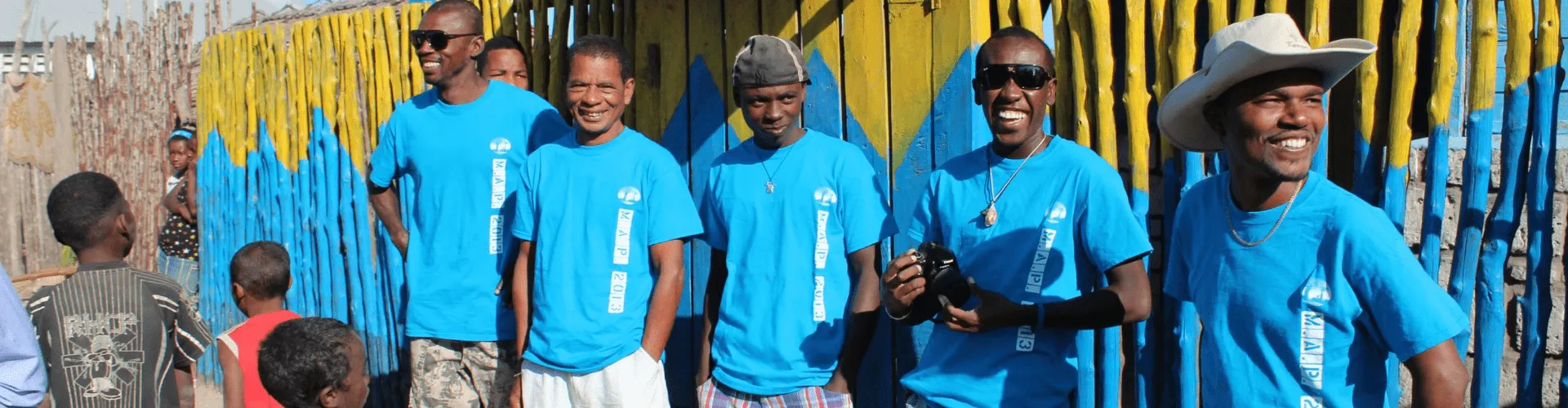
Partners in Madagascar: Tanambelo (Nado) Rasolondrainy | George (Bic) Manahira | Fenomanana Felicia | Vavisoa Voahirana (Hira) | Tsitohery Justome François (Ricky) | Razafy Magnefa Roi | Marius Brenah Jean Clovis | Tahirisoa Lorine Carnah | Harison Léonce | Augustin Jean Yves | Laurence Hubertine | Fortiine Odilon | Soafiavy Patricia | Lovanirina Soamampionona Fleurita Jacqueline | Rafaralahy Victor (Pota) | Nolahy Albert | Andriakanja Vanillah
Graduate Students: Chiamaka Lauretta Anyanwu | Dani Buffa | Amber Carter | Jennifer Chen | Ebony Creswell | Abiola Ibirogba | Karen Pham | Clare Randolph | Clara Randimbiarimanana
Alumni: Claire Byrnes | Sean Hixon | Eréndira M. Quintana Morales
Principal Investigator
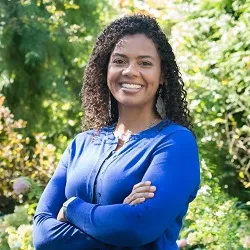
Dr. Douglass is an Associate Professor of Climate at the Columbia Climate School. Prior to her appointment at Columbia, Douglass was the Joyce and Doug Sherwin Early Career Professor in the Rock Ethics Institute and Assistant Professor of Anthropology and African Studies at Penn State. She was also a Peter Buck Postdoctoral Fellow at the Smithsonian’s National Museum of Natural History, where she was advised by Dr. Torrey Rick in Anthropology and Dr. Helen James in Vertebrate Zoology. She is currently a Smithsonian Research Associate and a member of the scientific steering committee at IHOPE. Douglass earned her Ph.D. in Anthropology from Yale University and her AB in Classical Archaeology from Dartmouth College. Trained as an anthropological archaeologist, her research program investigates questions of human-environment interaction in coastal and island regions, particularly in contexts of resource scarcity, decreasing biodiversity and climatic and environmental change.
One of Douglass’ primary research objectives is to reconstruct the historical ecology of regions where current policy debates are centered on the development of sustainable livelihoods for rural communities living in and around conservation and resource “hot spots”. Her work aims to build bridges between anthropology, conservation and development by providing policy makers, development agencies and conservation organizations with deeper time perspectives on human-environment dynamics. She is particularly interested in developing new approaches to the study of human-environment dynamics that integrate theories and methods from anthropology, ecology, climate science and ethnohistory. Integral to her work is a commitment to inclusive research, co-produced with local, Indigenous and descendant community collaborators. To contact Dr. Douglass, email [email protected].
Postdoctoral Scholars
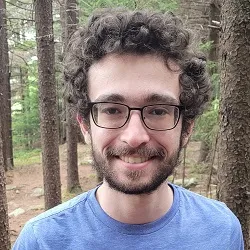
Dylan is a Postdoctoral Research Fellow funded by the National Science Foundation and OBT Lab and is hosted in the Climate School at Columbia University. He is an archaeologist specializing in remote sensing applications and human-environmental interaction. Dylan's work focuses primarily on settlement distributional patterns and their connections to environmental factors in island and coastal regions. Ultimately, his work seeks to further our understanding of how people interact with and are affected by their environment. Dylan's ongoing research seeks to understand the role that socioeconomic strategies play in long-term ecological change across landscapes. Specifically, his postdoctoral research focuses on how soil and vegetation are impacted by foraging, pastoralism, and agricultural activities and how sustainability is impacted by these differing socioeconomic systems. Dylan earned his Ph.D. in Anthropology in 2022 from Penn State. He also has an MA (2018) and BS (2017) in Anthropology and a BA (2017) in Geography from Binghamton University. Dylan currently serves on the Editorial Board of Archaeological Prospection as an Early Career Researcher. To contact Dylan, email [email protected].
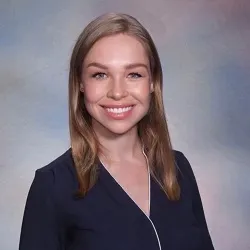
Katharine “Kate” Thompson is a postdoctoral researcher at the Columbia Climate School and presidential postdoctoral fellow in the Department of Anthropology at Penn State University. She received her BA in Anthropology and BS in Community, Environment, and Development from Penn State University, and both her MA and Ph.D. in Anthropology from Stony Brook University. Her research interests include human-wildlife interactions, human behavioral adaptions to climate change and zoonotic disease, and natural resource use as a form of resilience for indigenous communities. Her dissertation work looked at the interconnected socioeconomic, food-security, and sociocultural factors that drive illegal wildlife consumption in Western Madagascar. At the OTB lab, Kate is currently developing qualitative and quantitative survey toolkits that assess barriers to environmental agency in Southern Madagascar. Outside this work, Kate is developing the first large-scale, cross-disciplinary analysis of the adverse events scientists experience while conducting fieldwork. Kate believes that real inclusivity and equity in STEM fields must include data-informed safety protocols and risk management practices that better protect researchers in urban and remote wilderness locations alike. To contact Kate, please email [email protected].
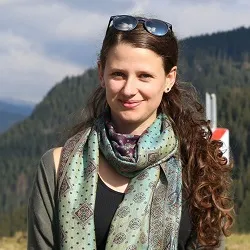
Leanne is a postdoctoral fellow funded by the Swiss National Science Foundation and hosted by the University of Edinburgh, Royal Botanic Gardens Edinburgh, Columbia Climate School, and Kew Madagascar Conservation Centre. Her current project focuses on reconstructing the Holocene savannas of Madagascar, and understanding the associated implications of long-term disturbance dynamics and modern human land use. Leanne earned her PhD in Geosciences and Environment from the University of Lausanne (Institute of Earth Surface Dynamics), and her MSc in social science from the University College London (Department of Anthropology). Her main research interest is understanding human-environment dynamics at multiple spatial and temporal scales, with the goal of supporting sustainable land stewardship and conservation. To contact Leanne, email [email protected].
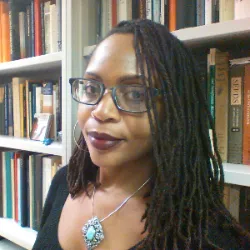
Shayla Monroe is a postdoctoral scholar in Anthropology at University of California, Santa Barbara (UCSB), where she received her PhD in 2021. She specializes in faunal analysis, the social zooarchaeology of Sudan and Egypt, the archaeology of African pastoralism. Her dissertation analyzes the acquisition of cattle at the ancient Egyptian colonial fortress of Askut (c. 1850-1550 BC) and its implications for culture contact and asymmetrical power relations between pastoralists and non-pastoralists. Monroe earned her M.A. in Anthropology from UCSB in 2015. Since 2013, she has worked as an archaeologist at the 3rd Cataract of the Nile River in Sudan, first at the Egyptian colonial site at Tombos, and then at the Kerma hinterlands site, Abu Fatima, also in northern Sudan. Monroe began her career at Howard University, where she earned degrees in Anthropology and English (2012). She also spent two seasons (2010 and 2011) working at L’Hermitage plantation (also known as the Best Farm Slave Village) with the National Park Service in Frederick, Maryland.
Partners in Madagascar
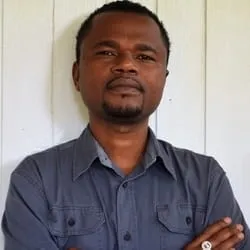
Tanambelo (Nado) Rasolondrainy, Ph.D.
Director, Centre de Documentation de l'Art et les Traditions Orales à Madagascar
Email
Nado is the Director of the Centre de Documentation et de Recherche sur l'Art et les Traditions Orales à Madagascar at the University of Toliara. He was formerly a Postdoctoral Researcher in the OBT Lab at Penn State University. He received both his BA and MA in History from the University of Toliara, an MA in Archaeology from the University of Dar es Salaam, an MPhil in Anthropology from Yale University, and most recently his Ph.D. in Anthropology from Yale. His research interests include human-environment interactions, settlement patterns, indigenous knowledge, rock art, and regional interactions. He participated in archaeological research projects conducted in different countries including the Comoro islands, Kenya, Madagascar, Peru, and Tanzania. At OBT Lab, he is specifically analyzing oral histories to (1) document how coastal Vezo people shaped local marine and terrestrial ecosystems over time and space, (2) curate these materials to create open-source digital archives for the public, and (3) prepare academic publications and grant proposals in close collaboration with Vezo community members, to empower them to advocate for their lifeways and negotiate policies for conservation and sustainable development. To contact Nado, email [email protected].
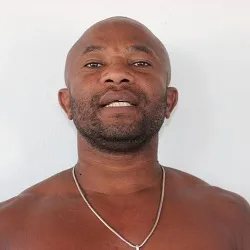
Manahira George (Bic)
M.A.P. Director in Madagascar
CV
Bic is the local director of the MAP project in Madagascar and joined the project in 2011. As a native of the Vezo community, Bic knows all about the living things underwater and above water. Bic currently acts as Coordinator of Expeditions for Blue Ventures Madagascar, which is an NGO working on environmental conservation and marine research.
Bic is also a PADI SCUBA Staff Instructor. He is the first Malagasy diver to be certified as a PADI Open Water Instructor and Staff Instructor, meaning that he is certified to teach people how to dive, as well as to teach divers to become dive instructors. Bic is very active in other aquatic sports, such as surfing, kitesurfing, and free diving.
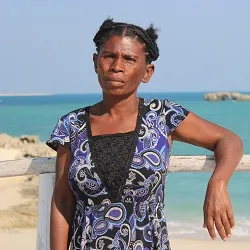
Fenomanana Felicia
M.A.P Team Member, Fishing Expert
Felicia FENOMANANA ty agnarako. Terake tamy 09 Sept 1970 tao Morombe aho. Nianatse tamy sekoly Saint-Joseph Morombe. Mpihaza ty asako Andavadoake eto.
English translation: Felicia Fenomanana was born in 1970 and was raised in Morombe where she went to Sait-Joseph secondary school. She is a fisherwoman in Andavadoake.
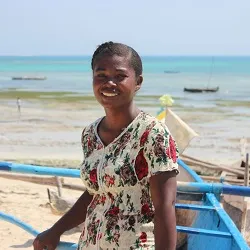
Vavisoa Voahirana (Hira)
M.A.P Team Member
VAVISOA Voahirana ty agnarako. Terake tamy 13 septambra 1990 ta Morombe aho. Nianatse tamy sekoly Sainte Famille Andavadoake eto aho. Ta hahay ty tantara taloha ty nahatonga ahy nilitse niara niasa amy projet MAP toy. Mpanao analyse coquillage ty tena asako voaloha’e amy projet toy ato. Fa magnampe manao survey noho manao analyse taolam-pia avao koa aho.
English translation: Vavisoa Voahirana (Hira) was born in 1990 in Morombe. She went to Sainte Famille secondary school in Andavadoake. Hira joined the MAP project to learn about ancient history. She primarily works as a shell analysis expert for the project. In addition, Hira helps with archaeological surveys and fish bones analysis.
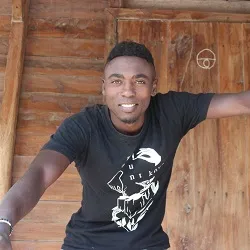
Tsitohery Justome François (Ricky)
M.A.P Team Member
TSITOHERY Justome François (Ricky) ty agnarako. Nianatse tamy Sacre-Cœur Toliara aho. Nanomboke tamy 2014 aho ty nilitse niara niasa amy projet MAP. Mpanao survey noho mpihaly lavake ty tena asako amy projet toy ato. Fa niasa tamy sites isankaraza’e – na amy toera malalake zay na agnate lava-bato – aho. Ankoatse’izay, magnampe amy fampitaha taolam-pia isan-karaza’e noho fanaova analyse vakivaky valagne tane avao koa aho.
English translation: Tsitohery Justome François (Ricky) went to Sacre-Coeur secondary school in Toliara. He then joined the MAP project in 2014 where he works as a surveyor and excavator for the project. Ricky has participated in different digs, including open-air and cave sites. In addition, he helps with analyzing pottery and fish bones.
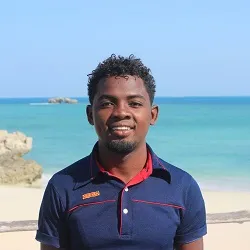
Razafy Magnefa Roi
M.A.P Team Member
Razafy Magnefa Roi ty agnarako. Roe amby roapolo (22) tao aho. Zanatany mipetrake Andavadoake eto aho. Nianatse tamy College Sainte Familles tao aho. Lafa nifara ty fianarako tao, nifindra nianatse a Toliara tamy Lycees La Pepiniere noho SEMA tao aho. Ty fagniriako tamy zaho mbo nikele ty ho lasa mpikaroke, satria zaho olo tea karokaroke avao koa tamy fiaignako. Noho’ty fagnampea noho ty fampianara’i Bic ahy, nitafilitse tamy MAP project ato aho tamy tao 2018. Nahasarike ahy ty fomba fianara ty tantara taloha atao’i MAP project. Maro ty raha tsy nihaiko mahakasike archeologie hatr’izay. Fe noho’ty fiofagna noho fiasako tamy MAP ato, lasa mahay manao survey, fouille, noho analyse-ndraha isan-karaza’e aho amizao.
English translation: Razafy Magnefa Roi is 22 years old. He was born and raised in Andavadoake and went to Sainte Famille secondary school in Andavadoake and La Pepiniere and SEMA High Schools in Toliara. It has been his childhood dream to become a researcher. With Bic’s support, Razafy joined the MAP project in 2018. He was interested in how the project studies ancient history. His training and experiences within the MAP project, have taught him skills in survey, excavation, and analysis of different materials such as ceramics, animal bones, and fish bones.
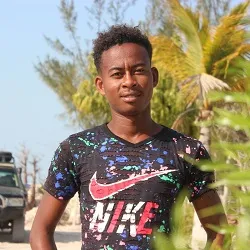
Marius Brenah Jean Clovis
M.A.P Team Member
MARIUS BRENAH Jean Clovis ty agnarako. Roe amby roapolo (22) tao aho. Mipetrake Andavadoake eto. Fa niafake BACC tamy taom-pianara 2019-2020 iny aho, ary mbo hanohy fianara. Zaho tea mitifitse sare, ary amy facebook agne ty fampiparitahako ty sare nitifiriko, na ty sariko zay na ty sarin’olo hafa. Nilitsy hiasa amy MAP ato aho satria teako ty asa fikaroha ty raha niaigna’e razam-be reo. Mangalake sare ty asako ato, ary la tena teako tokoa ty mitifitifitse sare. Zaho olo mankafy resake moziky, sinjake, noho fanatanjahan-tena.
English translation: Marius Benah Jean Clovis is 22 years old and was born and raised in Andavadoake. He got his high school diploma in 2020, and is planning to go to college. Jean Clovis loves photographing, you can find many of his photos featured on his Facebook. He joined the MAP team because he wanted to learn more about his ancestral history. Jean Clovis works as a photographer for the project. In his spare time he loves music, dancing, and sports.
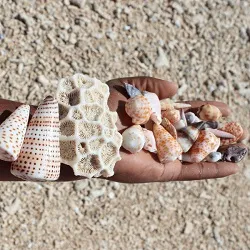
Tahirisoa Lorine Carnah
M.A.P Team Member
Gny specialite agnanako moa misimisy avao , eo resaky fagnalia amy fanaova excavation, mahay mampiasa GPS lafa manao survey, mahay manao analyse ceramics aho, mahay manenty couleur, sady mahay manao analyse coquillage, resaky fish collection koa mahay aho. Liana aho amy gny fampidira donne agnaty ordinateur, fa amy Ipad zaho mahay.
English translation: My specialty is new, in terms of digging for excavation. I know how to use GPS to do surveys, I know how to analyze ceramics, I know how to paint, and I know how to do shell analysis. I'm also good at fish collection. I'm interested in installing data on my computer, and I'm good at using the iPad.
Harison Léonce
M.A.P Team Member
Ty tsaikefa agnanako amy projet toy ato zany, zaho mahay ty fomba fanaova "survey" mahay mampiasa GPS sady mahay manoratry, mahay ty fomba fanaova excavation, sady mahay manao analyse ceramic noho coquillage, mahay manao interview koa aho, ty fomba ifampiresaha amin'olo, mahay resaka fagnadiadia, resake collection taolampia, mahay mampiasa ordi koa. Ka amy raha iaby teo zay, gny fanaova survey, excavation noho analyse ceramic no tena magnavana ahy. Fa gny tena maha liana ahy ahy mba anovognako ty tsaikefa fa agnanako zany , zaho te ahay bebe kokoa gny mahakasiky gny rindry lafa magnaly, eo koa resaky collection taolam-pia regny, te aha voavehy gny mahakasike aniregny aho.
English translation: I have experience in projects like this. I know how to do surveys, I know how to use GPS, and I know how to write. I know how to do excavation, and I know how to do ceramic analysis for scaling. I also know how to do interviews, how to communicate with people. Good at oral interview history, bone collection, and good at using the computer. So in the meantime, surveying, excavation for ceramic analysis is my favorite. But I'm really interested in changing the concept that I have. I want to know more about the magnificent walls, as well as about the collection of fish bones. I want to know more about them.
Augustin Jean Yves
M.A.P Team Member
Ty tsaikefa agnanako sy nitovozako amy projet ato moa resake enquette, eo koa resaky excavation, survey, analyse ceramics sy coquillage. Ty raha maha liana ahy agnaty projet toy ato koa gny fianara teny Anglisy ary fa gantiny fa mianatry anizay zaho amizao , magnaraky anizay koa resaky fagnavaha ty karazan-taolam-biby, te ahay koa aho gny daty nahafatesan'iregny biby regny, de te ahay koa aho mahakasiky ty charbon hoe toy charbon niketreha vare na fia na coquillage.
English Translation: My experience with the project here is on surveying, as well as excavation, survey, ceramics analysis, and coating. I'm interested in the project, I'm learning English, and in return I'm learning what I'm learning, as well as the analysis of fossils. I also want to know how old the animals are, so I refer to charcoal as charcoal made of rice or fish or shellfish.
Laurence Hubertine
M.A.P Team Member
My experience with the project is data entry, interview surveying, as well as excavation, survey, ceramics analysis, and coating. I'm interested in the project. I'm good at oral interviews, analysis of shellfish and fossils. I also want to know more English.
Fortiine Odilon
M.A.P Team Member
Ty tena magnavana ahy ato zao amy resaky fandaisa laka, fa zaho koa mahay gny fomba fagnalia lafa manao excavation, mahay manao analyse koa aho. Gny raha maha liana ahy ato, zaho te ahay gny tantara ty olo be taloha tagny.
English Translation: I'm really good at excavation, but I'm also good at excavation, I'm good at analysis. If I'm interested here, I want to know my story and the stories of the old people.
Soafiavy Patricia
M.A.P Team Member
Ty raha haiko amy projet MAP toy ato, zah mahay manao analyse, sady mahay mampiasa GPS, mahay gny fomba fagnalia lafa manao excavation aho sady mahay mandrefy gny materiel hita. Nao ty tsy haiko gny fampilira donne agnaty ordinateur. Ka tiako ho izay fampilira donne agnaty ordinateur zay.
English Translation: I'm good at a MAP project like this, I'm good at analyzing, I'm good at using GPS, I'm good at excavation techniques and I'm good at measuring the material found. I don't know how to install data on the computer. So I want to learn more about data entry.
Lovanirina Soamampionona Fleurita Jacqueline
M.A.P Team Member
I am full of LOVANIRINA Soamampionona Fleurita Jacqueline. I am 23 in Andavadoake. I am studying in 4th grade at IESTIM Antaninandro ANTANANARIVO. I work in the Management field and logistics assistant here in MAP project. I am good at analysis (shellfish, ceramics and doing data entry and interviewing the elders). I have done excavation and survey but I am still studying so I work part time on the project. I do a lot of the data entry even while I am studying.
Rafaralahy Victor (Pota)
M.A.P Team Member
I know how to do surveys or excavation projects, but my main job is to boat captain and shelling the pirogue. But for analysis, I don't know much about it as I am always occupied on the boat or repairing. I want to learn more technical science in project.
Nolahy Albert
M.A.P Team Member
I used to be a Zebu guard since I was kid. I went to school in Befadefa and I've lived there since. I help lots of the MAP project for collecting different medicinal trees and grasses. So now I am the first security for MAP project and want to learn more what we doing here on this project.
Andriakanja Vanillah
M.A.P Team Member
I, like the rest of the team, know how to survey, excavate and do analysis, and have also done interviews so any work available here in the project I am always keen to learn more. I have a driving license and know basic mechanics for diesel cars.
Graduate Students
Chiamaka Lauretta Anyanwu, MSc
Ph.D. Student
Email
Chiamaka is a PhD Student in the Department of Earth and Environmental Science (DEES) at Columbia University. She received a BSc and an MSc in Archaeology from the University of Ibadan. Her areas of research interests include paleoecology, geoarchaeology, archaeobotany, settlement formation, ceramics, and Cultural resource management. Her previous research focused on human-environment interaction during the Holocene in southwest Nigeria. It investigated the impact of forest clearance for cultivation on the environment by the Late Stone Age occupation in the rainforest region of Nigeria and the strategies employed for crop management. She has participated in several archaeological projects at prominent archaeological sites in Nigeria, for example, the Old Oyo Empire, Benue valley, Ile-Ife, Sungbo-Eredo, and Iresi LSA site among others. She enjoys dancing, listening to music, seeing movies, playing volleyball, traveling, and adventures. To contact Chiamaka, email [email protected].
Dani Buffa, MSc
Ph.D. Candidate
Email
Dani is a Dual-Title Ph.D. candidate in Anthropology and Climate Science at Penn State. Inspired through a lab tech job at the Smithsonian Natural History Museum researching historical shellfishing along the Chesapeake Bay, she focuses her research on estuarine socioecological dynamics. Her current research investigates regime shifts in the coupled human and natural systems by studying how mollusk fishery productivity is affected by paleoclimatological fluctuations, maintenance and loss of traditional ecological knowledge, and subsistence practices. Her work centers on Southwest Madagascar’s Fagnemotsy seasonal estuary. Dani integrates an array of methods from ethnoarchaeology, paleoecology, and complex systems modelling to study human-environmental interaction through time. She previously received a BA in Anthropology from the University of Maryland and a MS in Osteoarchaeology from the University of Sheffield. To contact Dani, email [email protected].
Amber is a fourth year PhD student in the School of Geosciences at the University of Edinburgh. Her research focuses on ecosystem change and social ecological dynamics in tropical coastal ecosystems and small-scale fishing communities. Her work is centered in southwest Madagascar with traditional Vezo fishing communities in the Velondriake Locally Managed Marine Area. She combines social, ecological and climate data to explore issues around food security, adaptation, resilience and marine conservation. Amber was named a 2022 Explorer with the Scientific Exploration Society. She holds an MSc in Marine Systems and Policies from the University of Edinburgh and a BSc in Environmental Science from Queen Mary University of London and University of Miami. To learn more about Amber’s work visit www.amber-carter.com. To contact Amber, email [email protected]
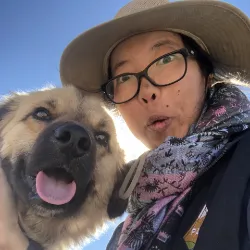
Jenny Chen, M.A.
Ph.D. Student
Email
Jennifer “Jenny” Chen is a fourth year graduate student in the dual-title program for Anthropology and Climate Science at Penn State. She received a BA with honors from University of California, Davis in Anthropology and English. Her research interests focus on Early to Late Archaic pre-Hispanic hunter-gatherers in the Andean Altiplano in the Lake Titicaca Basin. She uses stable carbon and nitrogen isotopes analysis to look at pre-Hispanic hunter-gatherer diets before the process of domestication of important food resources like camelids, tubers, and quinoa. She participated in archaeological field work with the Proyecto Arcaica del Lago Titicaca Basin in 2018 with Dr. Randy Haas. To contact Jennifer, email: [email protected]
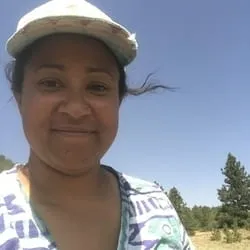
Ebony Creswell, MA
Ph.D. Student
Email
Ebony is broadly interested in the paleoepidemiology of infectious diseases. She holds a BA in Anthropology from the University of California and a MA in Anthropology from the University of Wyoming. She also has extensive archaeological field experience. For her master’s thesis, she created an agent-based model to simulate the spread of tuberculosis in a hunter-gatherer social context. During her PhD, Ebony would like to integrate genomic, ethnographic, and archaeological data to help advance our understanding of how different social systems affect disease spread and overall human health. Additionally, Ebony is an NSF Graduate Research Fellow. To contact Ebony, email [email protected].
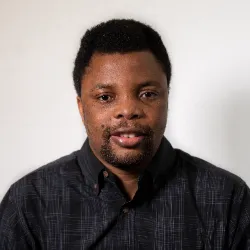
Abiola Ibirogba is a PhD student in the Department of Earth and Environmental Science (DEES) at Columbia University. He received a BSc and an MSc in Archaeology from the University of Ibadan. Abiola’s current research examines population movements and migration during the Atlantic era and its effects on human ecology in West Africa. He is particularly interested in the events that shaped the formation of communities in the coastal plains of Badagry, Lagos State, Nigeria, and their effects on paleoecological resources and human consumption. Abiola’s research seeks to establish a chronology for coastal communities in the Badagry region and how these human populations established a uniform craft system and exploited the resources on the West African Coast. To contact Abiola, email [email protected].
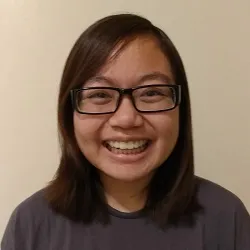
Karen Pham
Ph.D. Student
Email
Karen is a PhD candidate in Geosciences at Penn State and a National Science Foundation (NSF) Graduate Research Fellow. She received her BS in Geology from the California Institute of Technology (Caltech). Karen considers herself a paleoecologist and paleobotanist; her work focuses on using quantitative methods to investigate ecological and evolutionary processes such as seed dispersal and speciation in Madagascar. In particular, her dissertation examines how past extinctions of large-bodied animal dispersers and past climate shifts may continue to affect seed sizes of modern-day Malagasy plants. In her spare time, Karen enjoys cooking, cross-stitching, and learning to play the electric bass. To contact Karen, email [email protected].
Clare Randolph
Ph.D. Student
Email
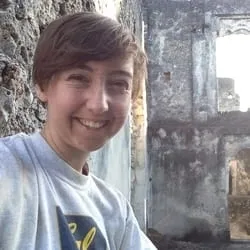
Clare is a PhD student in the OBT lab at Columbia University. She received her BA in Ecology from Rice University in 2016. During her time at Rice, Clare switched her focus to archaeology and attended field school in Songo Mnara where she became interested in pursuing historical ecology questions regarding past human marine resource use. After graduating, Clare spent time working as an ecological consultant looking at the current human impact on the grasslands of central California. She then returned to archaeology by working as a lab assistant in the Bear Bones Lab at UC Berkeley. Clare’s current interests are heavily influenced by her early training as a marine ecologist. She is focused on learning more about how humans have used marine resources over time, and how this use might affect the ecology of marine landscapes in the present. Specifically, Clare is researching Swahili use of coral as a building material along the east African coast and how the past harvesting of coral has affected the marine ecology of the region. Clare is an avid SCUBA diver and loves to be in the water any chance she can get. You can find her hiking, collecting bones for her reference collection, and spending time with her partner and their dog on her days off. To contact Clare, email [email protected].
Clara Randimbiarimanana
Ph.D. Student
Email
Clara Randimbiarimanana is a fourth-year Ph.D. student from Antananarivo in Sociocultural and Applied Anthropology at the University of Arizona. Her overall interests focus on participatory development and environmental justice in Africa. She specifically investigates and engages with the ways in which community voices and cultural capital are valued in approaching education, and environmental discourses. Clara received her master's degree in Anthropology from the University of Arizona in 2021, where her research focused on the importance of using various dialects, especially in social science subjects to promote decolonial and learner-centered education in Madagascar. Her current project explores ecological funds of knowledge in Atsimo Andrefana Madagascar and Dakar, Senegal. More specifically, it looks at how community-based cultural practices and expressions can help people cope with the ongoing environmental injustice in both places. Prior to her graduate studies, she earned her bachelor's degrees from Lafayette College, in Pennsylvania in Sociology & Anthropology, and International Affairs with a concentration in social justice and human rights in Africa. She also served in a few positions in the international development field through her positions with Management Systems International (MSI) in the D.C area and ESDA Friendly Haven in Windhoek, Namibia.
Alumni
Claire Byrnes
Undergraduate Student
Email
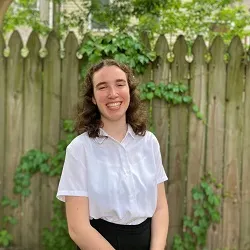
Claire is a senior studying Anthropology and Geography. She is researching shoreline changes over time in Madagascar using satellite imagery. This project aims to develop a predictive model by training samples of different land types. She hopes that understanding past environmental change can inform cultural resource management and community planning to ensure that those most at risk along the coast do not feel the burden of climate change. At Penn State, she is involved in the Student Farm and works as a Peer Adviser for the College of Liberal Arts. In her free time, she volunteers at a community garden, hikes, plays viola, and bakes bread. To contact Claire, email [email protected].
Sean Hixon, Ph.D.
Postdoctoral Scholar
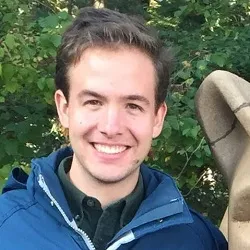
Sean Hixon recently graduated with his PhD in archaeology from the University of California, Santa Barbara. His dissertation research focused on how human-introduced animals contributed to the past extinctions of native megafauna on Madagascar and whether relative drought tolerance predicts extinctions of large herbivores on Madagascar during the past 2,000 years. Sean is now at the Max Planck Institute for the Science of Human History. In Jena, Sean is assisting with the Dig Data collection through the IsoMemo Initiative. He is also continuing to research past animal introductions and extinctions on Madagascar through funding from a Humboldt Fellowship.
Eréndira M. Quintana Morales, Ph.D.
Assistant Professor of Anthropology at the University of California, Santa Cruz
Website
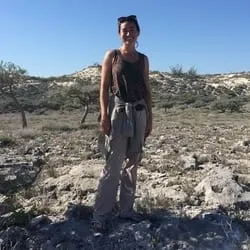
Dr. Quintana Morales is an Assistant Professor of Anthropology at the University of California, Santa Cruz, and a former postdoctoral scholar in the Department of Anthropology at Penn State University. Her research integrates various anthropological research themes, including the historical ecology of coastal environments, the role of foodways in social identity and interaction, coastal urbanism and the application of archaeology towards the conservation of coastal biodiversity and livelihoods. She earned her PhD from the University of Bristol in the United Kingdom. Her research has been funded by a Fyssen postdoctoral study grant at the Natural History Museum in Paris during 2014 and an NSF-funded postdoctoral Research fellowship in the Department of Anthropology at Rice University from 2015-2017. Her current work in eastern Africa and southwest Madagascar investigates the socio-ecological impacts of human interaction with the rich fish biodiversity of coastal areas through collaborative community-based research. Outside of the lab, she enjoys hiking with her dog Yunque, running, and creating arts and crafts.
Non-human Partners